
LeetCode203.移除链表元素🌟🌟🌟🌟🌟简单

问题描述

原文链接:203. 移除链表元素

给你一个链表的头节点 head 和一个整数 val ,请你删除链表中所有满足 Node.val == val 的节点,并返回新的头节点 。

示例 1:
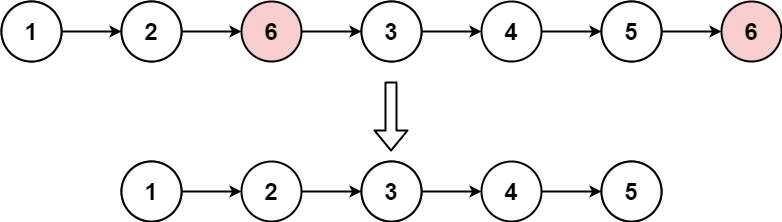
img

输入:head = [1,2,6,3,4,5,6], val = 6
输出:[1,2,3,4,5]

示例 2:

输入:head = [], val = 1
输出:[]

示例 3:

输入:head = [7,7,7,7], val = 7
输出:[]

提示:

  • 列表中的节点数目在范围 [0, 104] 内
  • 1 <= Node.val <= 50
  • 0 <= val <= 50

思路讲解

代码实现

Java

/**
 * Definition for singly-linked list.
 * public class ListNode {
 *     int val;
 *     ListNode next;
 *     ListNode() {}
 *     ListNode(int val) { this.val = val; }
 *     ListNode(int val, ListNode next) { this.val = val; this.next = next; }
 * }
 */
class Solution {
    public ListNode removeElements(ListNode head, int val) {
        // 删除头节点
        while(head != null && head.val == val){
            head = head.next;
        }

        if(head == null){
            return head;
        }

        ListNode cur = head.next;
        ListNode pre = head;
        while(cur != null){
            if(cur.val == val){
                pre.next = cur.next; 
            }else{
                pre = cur;
            }
            cur = cur.next;
        }

        return head;
    }
}

Python

# Definition for singly-linked list.
# class ListNode(object):
#     def __init__(self, val=0, next=None):
#         self.val = val
#         self.next = next

class Solution(object):
    def removeElements(self, head, val):
        """
        :type head: ListNode
        :type val: int
        :rtype: ListNode
        """
        # 删除头节点
        while(head != None and head.val == val):
            head = head.next

        if(head == None):
            return head

        cur = head.next
        pre = head
        while(cur != None):
            if(cur.val == val):
                pre.next = cur.next 
            else:
                pre = cur
            cur = cur.next

        return head

C++

/**
 * Definition for singly-linked list.
 * struct ListNode {
 *     int val;
 *     ListNode *next;
 *     ListNode() : val(0), next(nullptr) {}
 *     ListNode(int x) : val(x), next(nullptr) {}
 *     ListNode(int x, ListNode *next) : val(x), next(next) {}
 * };
 */
class Solution {
public:
    ListNode* removeElements(ListNode* head, int val) {
        // 删除头节点
        while(head != nullptr && head->val == val){
            head = head->next;
        }

        if(head == nullptr){
            return head;
        }

        ListNode* cur = head->next;
        ListNode* pre = head;
        while(cur != nullptr){
            if(cur->val == val){
                pre->next = cur->next; 
            }else{
                pre = cur;
            }
            cur = cur->next;
        }

        return head;
    }
};

Go

/**
 * Definition for singly-linked list.
 * type ListNode struct {
 *     Val int
 *     Next *ListNode
 * }
 */
func removeElements(head *ListNode, val int) *ListNode {
    // 删除头节点
    for head != nil && head.Val == val {
        head = head.Next
    }

    if head == nil {
        return head
    }

    cur := head.Next
    pre := head
    for cur != nil {
        if cur.Val == val {
            pre.Next = cur.Next
        } else {
            pre = cur
        }
        cur = cur.Next
    }

    return head
}


发表回复

后才能评论

评论(6)

  • 我来吃饭啦 永久会员 2024年6月17日 下午2:49
    # Definition for singly-linked list.
    # class ListNode:
    #     def __init__(self, val=0, next=None):
    #         self.val = val
    #         self.next = next
    class Solution: #  有虚拟头节点
        def removeElements(self, head: Optional[ListNode], val: int) -> Optional[ListNode]:
            dummyHead = ListNode(-1, head)
            cur = dummyHead
            while cur.next:
                if cur.next.val == val:
                    cur.next = cur.next.next
                else:
                    cur = cur.next
            return dummyHead.next
    #递归法
    # Definition for singly-linked list.
    # class ListNode:
    #     def __init__(self, val=0, next=None):
    #         self.val = val
    #         self.next = next
    class Solution:
        def removeElements(self, head: Optional[ListNode], val: int) -> Optional[ListNode]:
            if not head: 
                return 
            head.next = self.removeElements(head.next, val)
            return head.next if head.val == val else head
    
  • uu 永久会员 2023年9月19日 上午11:53
    /**
     * Definition for singly-linked list.
     * public class ListNode {
     *     int val;
     *     ListNode next;
     *     ListNode() {}
     *     ListNode(int val) { this.val = val; }
     *     ListNode(int val, ListNode next) { this.val = val; this.next = next; }
     * }
     */
    
    // 【迭代法】
    // 时间复杂度:O(n),遍历比较
    // 空间复杂度:O(1),只开辟两个ListNode,即两个指针
    class Solution {
        public ListNode removeElements(ListNode head, int val) {
            while(head != null && head.val <span class="text-highlighted-inline" style="background-color: #fffd38;"> val) { //头节点与目标val值判断
                head = head.next;
            }
            if(head </span> null) { //必须放在头节点值判断之后
                return head;
            }
            //头节点不可动
            if(head.next != null) { //虽然头节点不为空,但其后继有可能为空
                ListNode sub = head.next; //后继
                ListNode pre = head; //前驱
                while(sub != null) { //直到链表所有元素值判断完成
                    if(pre.next.val <span class="text-highlighted-inline" style="background-color: #fffd38;"> val) { //等价于(sub.val </span> val)
                        pre.next = sub.next; //必须先改变前驱的指向,否则丢失后面的链表
                    }
                    else {
                        pre = sub;
                    }
                    sub = pre.next;
                }
            }
            return head; //返回头节点,即整个链表
        }
    }
    
    // 【递归法】学习解题思路
    // 时间复杂度:O(n),遍历比较
    // 空间复杂度:O(n)
    // class Solution {
    //     public ListNode removeElements(ListNode head, int val) {
    //         //函数目的:head.val与val值比较,若相同则返回head = head.next.next
    
    //         //递归结束条件
    //         if(head <span class="text-highlighted-inline" style="background-color: #fffd38;"> null) {
    //             return head;
    //         }</span>
    
    //         //关系式
    //         head.next = removeElements(head.next, val);
    //         return head = head.val <span class="text-highlighted-inline" style="background-color: #fffd38;"> val ? head.next : head;</span>
    
    //     }
    // }
    
  • 泡芙 永久会员 2023年9月1日 下午2:28

    分情况(删除头结点,空节点和非头节点),不分情况(虚拟头节点)

    class Solution {
        public ListNode removeElements(ListNode head, int val) {
    
            // 删除头节点
            while (head != null && head.val == val) {
                head = head.next;
            }
    
            // 链表为空(头节点是否为空)
            if (head == null) {
                return head;
            }
    
            ListNode cur = head.next;
            ListNode pre = head;
    
            while (cur != null) {
                if (cur.val == val) {
                    pre.next = cur.next;
                } else {
                    pre = cur;
                }
                cur = cur.next;
            }
            return head;
        }
    }
    
  • 3_🔥 永久会员 2023年7月9日 下午9:42
    class Solution {
        public ListNode removeElements(ListNode head, int val) {
            ListNode dummy = new ListNode(-1);
            dummy.next = head;
            ListNode pre = dummy;
            ListNode cur = head;
            while (cur != null){
                if(cur.val == val){
                    pre.next = cur.next;
                }else pre = pre.next;
                cur = cur.next;
            }
            return dummy.next;
        }
    }
    

    自己的模板,用虚拟头节点可以避免删除头节点的问题

  • 帅气的冬瓜 普通 2023年6月26日 下午5:25

    打卡

如果您已经成功付款但是网站没有弹出成功提示,请联系站长提供付款信息为您处理